Posted on

StepsConnect: A Real-Time Step-Sensing Ambient Display System to Support Connectedness for Family Members Living Apart

Rui Wang et al.

Physical separation between family members arises not only from life choices such as education and employment, but also from health-related constraints that limit physical co-presence. This paper presents StepsConnect, a real-time step-sensing-based ambient display system that transforms personal walking data into dynamic digital art, providing low-effort and non-intrusive presence cues for family members living apart. The system continuously captures step data via smartphones and renders them as spatial and embodied visual cues embedded in everyday environments. We conducted a 90 min laboratory study with 15 young adult–parent dyads, in which young adults engaged in a simulated work session while viewing real-time visualizations of their parents’ step activity. Young adults’ perceived connectedness was measured using the Inclusion of Other in the Self (IOS) scale and complemented with semi-structured interviews, while parents’ walking data were logged to provide an objective behavioral reference. Quantitative results indicated modest and heterogeneous changes in IOS scores at the group level, with individual variability across participants. Qualitative findings suggested that step-based visualizations primarily functioned as ambient reminders and cues of presence, supporting momentary relational awareness while remaining calm and non-intrusive within the workspace context. Walking data exhibited large variation across dyads, providing objective context for participants’ subjective experience of presence, although connectedness was not simply proportional to activity magnitude. The findings suggest that aesthetic step-based ambient visualization primarily supports momentary relational awareness rather than immediate shifts in stable closeness. By clarifying this distinction, the study advances understanding of how sensing-based digital art may function as a complementary presence layer in intergenerational contexts.

R. Wang, T. Lu, F. Wang, Y. Lu, and J. Hu, “StepsConnect: A Real-Time Step-Sensing Ambient Display System to Support Connectedness for Family Members Living Apart,” Sensors, vol. 26, no. 5, pp. 1726, 2026.
FULLTEXT: PDF REFERENCE: BibTeX EndNote
DOI: 10.3390/s26051726
Posted on

Enhancing Response Quality by Children in Voice-based Sleep Diaries via AI-based Continuous Feedback

Shanshan Chen et al.

Digital sleep diaries are widely used in clinical practice and research to monitor children’s subjective sleep quality. A well-known limitation of survey methods is that children may not provide high-quality responses because they cannot or are not motivated to do so. We examine how to design “live”, continuous feedback in voice-based sleep diaries in order to enhance the quality of children’s responses. In a co-design workshop, we explored children’s preferences for different forms of feedback. We designed and compared experimentally symbolic (smiley), numeric, and no-feedback conditions, showing that both feedback types improved response quality across questions. Finally, an eight-day field study revealed that feedback resulted in higher and more consistent quality in self-report over time. Across these three studies, children valued playful and clear feedback, with preferences shifting depending on their cognitive needs. Our findings provide evidence that effective feedback must balance affective engagement and cognitive clarity and adapt to different contexts. We contribute empirically supported design insights for creating child-centered voice-based surveys that aim to enhance children’s adherence in independent self-report surveys. Our recommendations based on the study of sleep diaries can potentially be applied in other areas using voice-based surveys.

S. Chen, J. Hu, G. Wang, and P. Markopoulos, “Enhancing Response Quality by Children in Voice-based Sleep Diaries via AI-based Continuous Feedback,” in Proceedings of the 2026 CHI Conference on Human Factors in Computing Systems, 2026, pp. Article 129.
FULLTEXT: PDF REFERENCE: BibTeX EndNote
DOI: 10.1145/3772318.3790684
Posted on

Enhancing Children’s Self-Reporting in Chatbot Diaries through Rhyming Style

Shanshan Chen et al.

Children’s self-report is essential for research, education, and healthcare, yet existing methods such as surveys and diaries can be experienced as tedious and so lead to disengagement and low-quality responses. Chatbots have been suggested as a way to support children through conversational interaction, using age-appropriate language and an empathetic tone. Here we explore what could be suitable conversational styles for such chatbots. Specifically, we explore rhyme as a child-centered conversational style. We first conducted a co-design workshop with 35 children, which revealed preferences for short, playful, and soothing conversational patterns. Building on these insights, we designed a voice-based sleep diary in rhyming style and compared it to a prose style in a within-subjects study involving 40 children aged 8-12. Results show that rhyming prompts significantly improved response quality across question types and age groups, while maintaining high engagement even among children who preferred the prose style. We contribute proof-of-concept empirical evidence and design insights demonstrating how phonological scaffolding exemplified through rhyme extends the design space of capability-adapted chatbots beyond semantic simplification alone. While limited to short-term, lab-based sessions, this work provides initial evidence that conversational style can function as a design lever.

S. Chen, J. Hu, G. Wang, J. Li, T.-H. Wu, and P. Markopoulos, “Enhancing Children’s Self-Reporting in Chatbot Diaries through Rhyming Style,” in Proceedings of the 2026 CHI Conference on Human Factors in Computing Systems, 2026, pp. Article 128.
FULLTEXT: PDF REFERENCE: BibTeX EndNote
DOI: 10.1145/3772318.3791083

Posted on

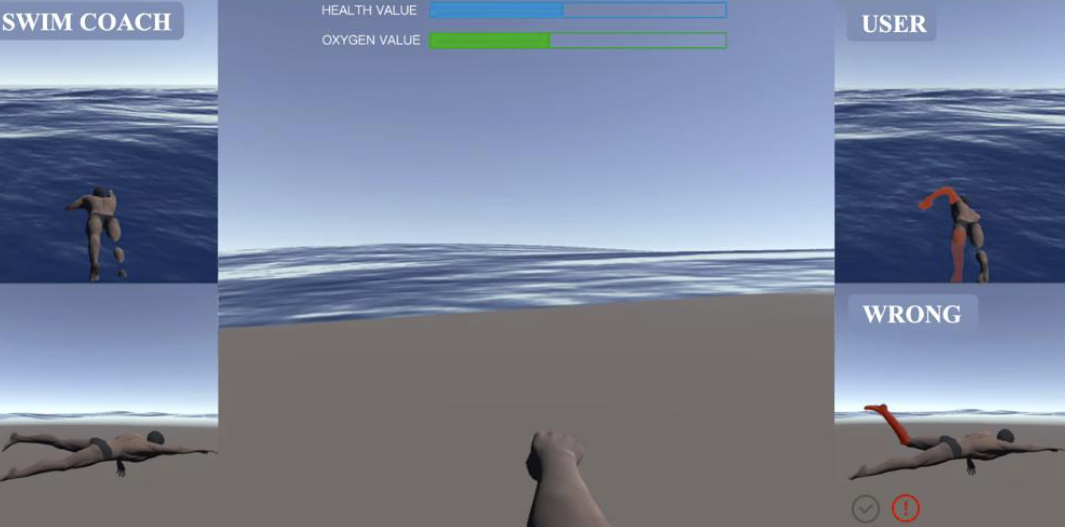
WonderFish: Design and Evaluation of a Social Exergame with Developed Bodily Interplay Dimensions for Children with ASD

By Jing Li et. al.

Exergaming interventions have been shown to improve physical and cognitive functions in children with Autism Spectrum Disorder (ASD). However, designing exergames specifically targeting the motor and social skills of children with ASD remains an important open area. To address this gap, we developed WonderFish, a social exergame incorporating bodily interplay theory explicitly developed and designed to engage children with ASD alongside their parents. This paper presents the design and evaluation of WonderFish across four game modes, assessing its impact on children’s motor and social skills, parent-child interactions, and user experience with eight pairs of children with ASD and their parents. We conducted qualitative and quantitative analyses, including game scores, physiological data, behavioral observations, surveys, and interviews. The results indicate that the game mechanism effectively elicited targeted motor and social behaviors during parent–child collaboration across the different modes. However, while parent-child dyads showed high levels of engagement, their interaction dynamics varied notably between the four modes.

J. Li, X. Yang, S. Qiu, Y. Yang, N. Zhao, J. Hu, E. Barakova, and T. Han, “WonderFish: Design and Evaluation of a Social Exergame with Developed Bodily Interplay Dimensions for Children with ASD,” International Journal of Human–Computer Interaction, pp. 1–35, 2025/12/26, 2025. FULLTEXT: PDF REFERENCE: BibTeX EndNote DOI: 10.1080/10447318.2025.2597509
Posted on

Balance Bird: an intergenerational balance exergame for motivating older adults’ participation

Shi Qiu et al.

Incorporating social interaction and cognitive stimulation into balance training can motivate older adults to engage more actively and consistently. We developed Balance Bird, an exergame designed to enhance physical, social, and cognitive activity for older adults. Thirty-six participants (18 older adults and 18 university students) were tested in pairs across three game modes featuring different types of bodily interaction and cognitive tasks: (1) the Single-Balance Ball Game (SBBG), where older players complete cognitive tasks independently; (2) the Dual-Balance Ball Game (DBBG), where older and younger players use lower limbs as input and complete cognitive tasks together; and (3) the Gesture-Balance Ball Game (GBBG), where older participants use gestures while younger ones use lower limbs to complete tasks. Our main findings revealed that all participants scored significantly higher in game competence in the GBBG compared to the SBBG. However, they experienced significantly less flow in the GBBG than in the DBBG. Female participants reported higher user experience and lower negative affect compared to males. Older participants also reported a better user experience overall, despite perceiving more challenges. In this study, we contribute empirical evidence that Balance Bird positively impacts physical, social and cognitive health for older adults.

S. Qiu, S. Liu, E. Kaisar, R. Yuan, X. Yang, S. Zhang, T. Han, and J. Hu, “Balance Bird: an intergenerational balance exergame for motivating older adults’ participation,” Behaviour & Information Technology, pp. 1–24, 2025. FULLTEXT: PDF REFERENCE: BibTeX EndNote DOI: 10.1080/0144929X.2025.2587736

Posted on

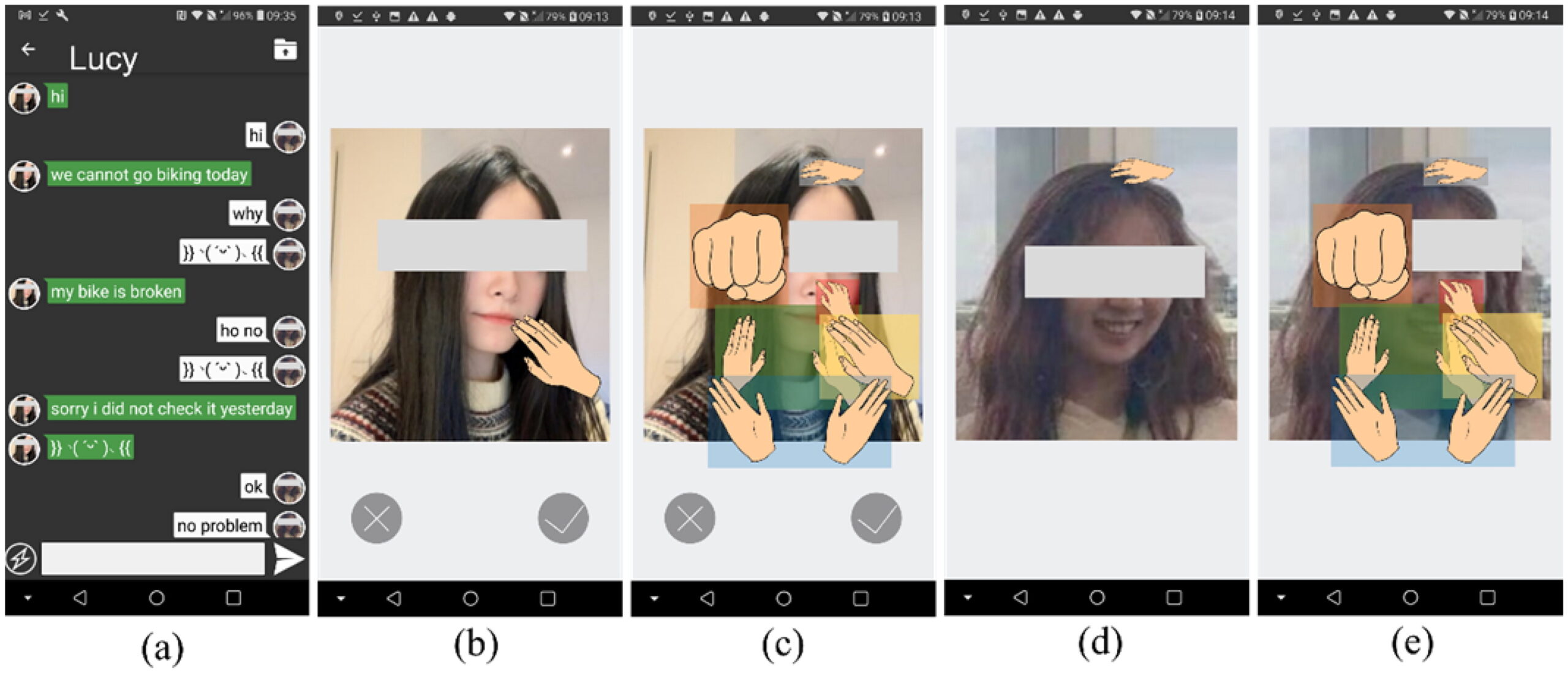
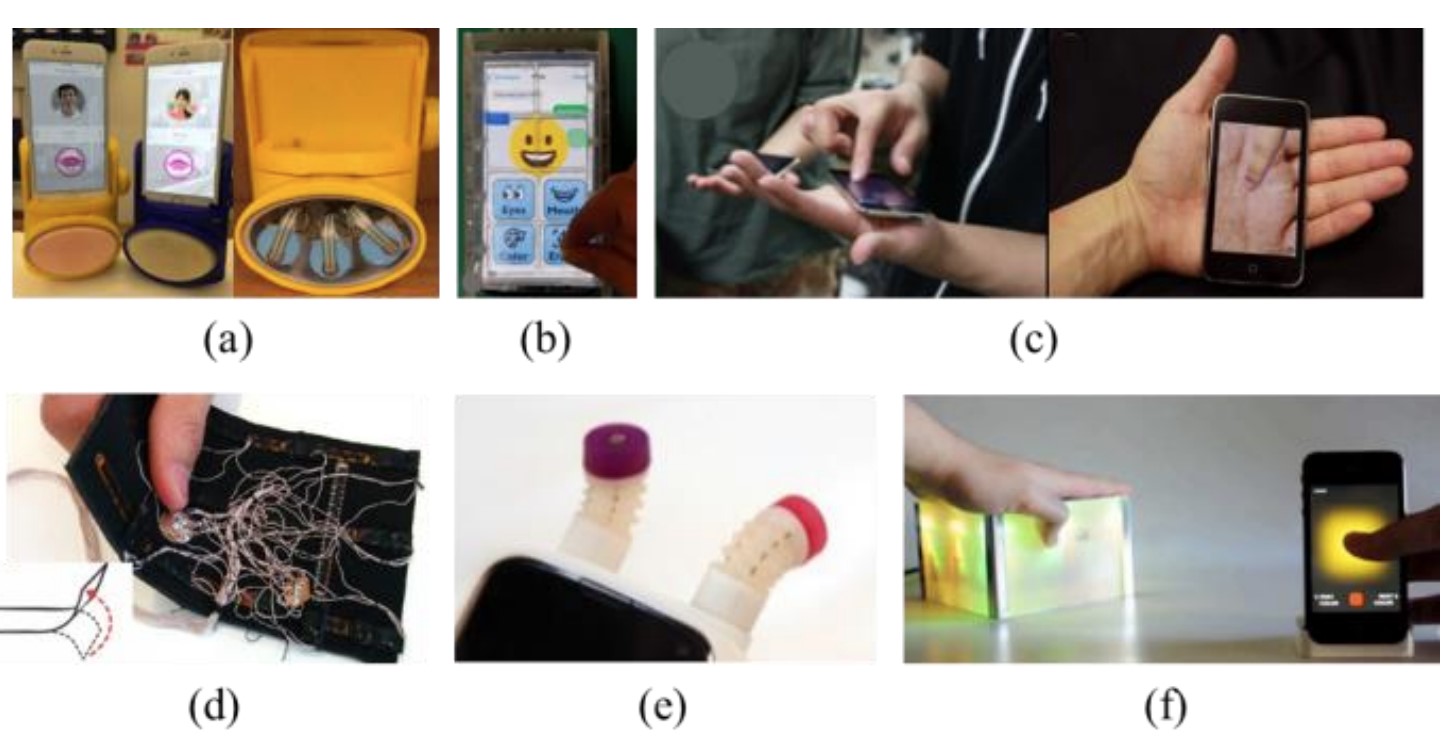
Designing mediated social touch for mobile communication: From hand gestures to touch signals

Qianhui Wei et al.

The main contributions of this paper are:
* We propose a generation method of Mediated Social Touch (MST) signals on smartphones, involving frequency, duration, and compound waveform compositions.
* We introduce a mapping function that translates MST gesture pressure into MST signal intensity by linking pressure values to signal frequency.
* We present a set of MST signals specifically designed for smartphones.
* We provide design insights and recommendations for applying MST signals in future smartphone-based social communication scenarios.

Q. Wei, J. Hu, and M. Li, “Designing mediated social touch for mobile communication: From hand gestures to touch signals,” International Journal of Human-Computer Studies, vol. 207, pp. 103684, 2026/01/01/, 2026. REFERENCE: BibTeX EndNote DOI: 10.1016/j.ijhcs.2025.103684
Posted on

Beyond Divergence: Characterizing Co-exploration Patterns in Collaborative Design Processes

by Xinhui Ye et al.

Exploration is central to the design process, as it fosters creativity and improves design outcomes. Within design teams, exploration becomes co-exploration—a collaborative and dynamic practice that this study examines. We conducted a five-month longitudinal observational study with 61 students across 16 design teams, using weekly diary interviews to trace the dynamics of co-exploration. From this, we developed a four-dimensional framework that identified five distinct patterns of co-exploration activities. Our findings reveal how co-exploration emerges across diverse activities and team interactions, fostering togetherness and keeping design teams open-minded. This engagement cultivates collective intelligence and enables teams to share knowledge, build upon each other’s ideas, and achieve results that exceed individual contributions. We argue that co-exploration reflects the trajectory of design success and warrants further study. Finally, we provide actionable insights for practitioners seeking to enhance co-exploration in collaborative design.

X. Ye, J. Frens, and J. Hu, “Beyond Divergence: Characterizing Co-exploration Patterns in Collaborative Design Processes,” She Ji: The Journal of Design, Economics, and Innovation, vol. 11, no. 3, pp. 345–372, 2025/09/01/, 2025. FULLTEXT: PDF REFERENCE: BibTeX EndNote DOI: 10.1016/j.sheji.2025.08.002
Posted on

Is adding tangible augmentation contributing to virtual sensory engagement of people with dementia? Assessment on user engagement, agitation, and apathy

Yuan Feng et al.

The conceptualisation and deployment of immersive sensory environments for therapeutic purposes have attracted a growing interest within the field of dementia care. In contrast to virtual immersions, tangible augmented virtual experiences offer a promising avenue to foster the self-engagement of people with dementia (PWD) through intuitive and multisensory interactions. However, empirical exploration of the added value conferred by tangible augmentation in such contexts remains limited. To address this, we investigated the impact of adding tangible augmentation in virtual sensory engagement, analyzing its influences on user engagement, agitation, and apathy. A field experiment was conducted with 15 residents diagnosed with dementia using mixed methods of video coding analysis and observational rating scales. Two experimental conditions (with and without tangible augmentation) and one control condition were adopted. The experimental findings highlight the significant role of tangible augmentation in enhancing engagement in terms of ‘attention’ aspects while enabling the recollection of memories through verbal communication. The findings also indicate a trend to promote positive emotions and reduce apathetic behaviours by adding a tangible layer to the virtual sensory experience. This study advances the understanding of tangible augmentation’s role in influencing cognition and perception aspects of PWD’s engagement and contributes to a more informed design of future immersive sensory technologies.

Y. Feng, M. Xue, S. Yu, D. Chen, L. Chen, E. I. Barakova, J. Hu, and G. W. Matthias Rauterberg, “Is adding tangible augmentation contributing to virtual sensory engagement of people with dementia? Assessment on user engagement, agitation, and apathy,” Behaviour & Information Technology, pp. 1-25, 2025.
FULLTEXT: PDF REFERENCE: BibTeX EndNote DOI: 10.1080/0144929X.2025.2547923
Posted on

“Did you sleep well?”: A Multimodal Sleep Diary for Sustained Self-Reporting by Children

by Shanshan Chen et al.

Sleep diaries are essential self-reporting tools for understanding children’s sleep patterns, but maintaining sustained engagement and high-quality self-reporting remains challenging. While voice input has been explored in child-computer interaction research as a method to improve engagement, limited evidence exists regarding its effectiveness in supporting sustained self-reporting over time. To address this gap, we conducted a five-day field study with 20 children aged seven to twelve, using a multimodal sleep diary that integrated both voice and text input modalities. Our findings reveal that voice input significantly supports younger children in maintaining engagement over five days, though their response quality remains lower than that of older children. Two distinct response quality patterns over time also emphasize the importance of accounting for individual differences in task performance. Furthermore, input modality preferences varied by age: older children consistently favored text input, while younger children generally preferred voice input over time. These results highlight the potential of incorporating voice input into text-based sleep diaries to better accommodate the diverse needs of children, enhancing both sustained engagement and response quality. Future studies with longer observation periods are needed to validate and extend these findings.

S. Chen, J. Hu, H. C. v. Iterson, N. Fang, and P. Markopoulos, “”Did you sleep well?”: A Multimodal Sleep Diary for Sustained Self-Reporting by Children,” in Proceedings of the 2025 CHI Conference on Human Factors in Computing Systems, 2025, pp. Article 1178. FULLTEXT: PDF REFERENCE: BibTeX EndNote DOI: 10.1145/3706598.3713425
Posted on

A systematic review of strategies in digital technologies for motivating adherence to chronic illness self-care

by Tianqin Lu et al.

The global incidence of chronic diseases is rising, posing substantial social and economic challenges. These conditions necessitate effective long-term self-care, which can be supported by digital interventions using remote measurement technologies, like smartphones and wearables. This systematic review investigates the motivational strategies within digital technologies to improve self-care adherence for chronic illnesses, particularly cardiovascular diseases and diabetes mellitus. A literature search was conducted, focusing on studies from 2004 to 2024. A total of 17 studies met the inclusion criteria. The reviewed interventions targeted medication adherence, lifestyle modifications, and symptom tracking. Findings suggest that motivational strategies, such as feedback, health literacy, reminders, and motivational messages, goal-setting, social interaction, gamification, and rewards can improve patient adherence to self-care behaviors. However, their effectiveness relies on theoretical grounding, data-driven features, and personalization. Future research should prioritize integrating robust theories and developing standardized metrics for adherence to enhance the reliability and impact of digital interventions.

T. Lu, Q. Lin, B. Yu, and J. Hu, “A systematic review of strategies in digital technologies for motivating adherence to chronic illness self-care,” npj Health Systems, vol. 2, no. 1, pp. 13, 2025/04/26, 2025. FULLTEXT: PDF REFERENCE: BibTeX EndNote DOI: 10.1038/s44401-025-00017-4