Qianhui Wei, Jun Hu & Min Li
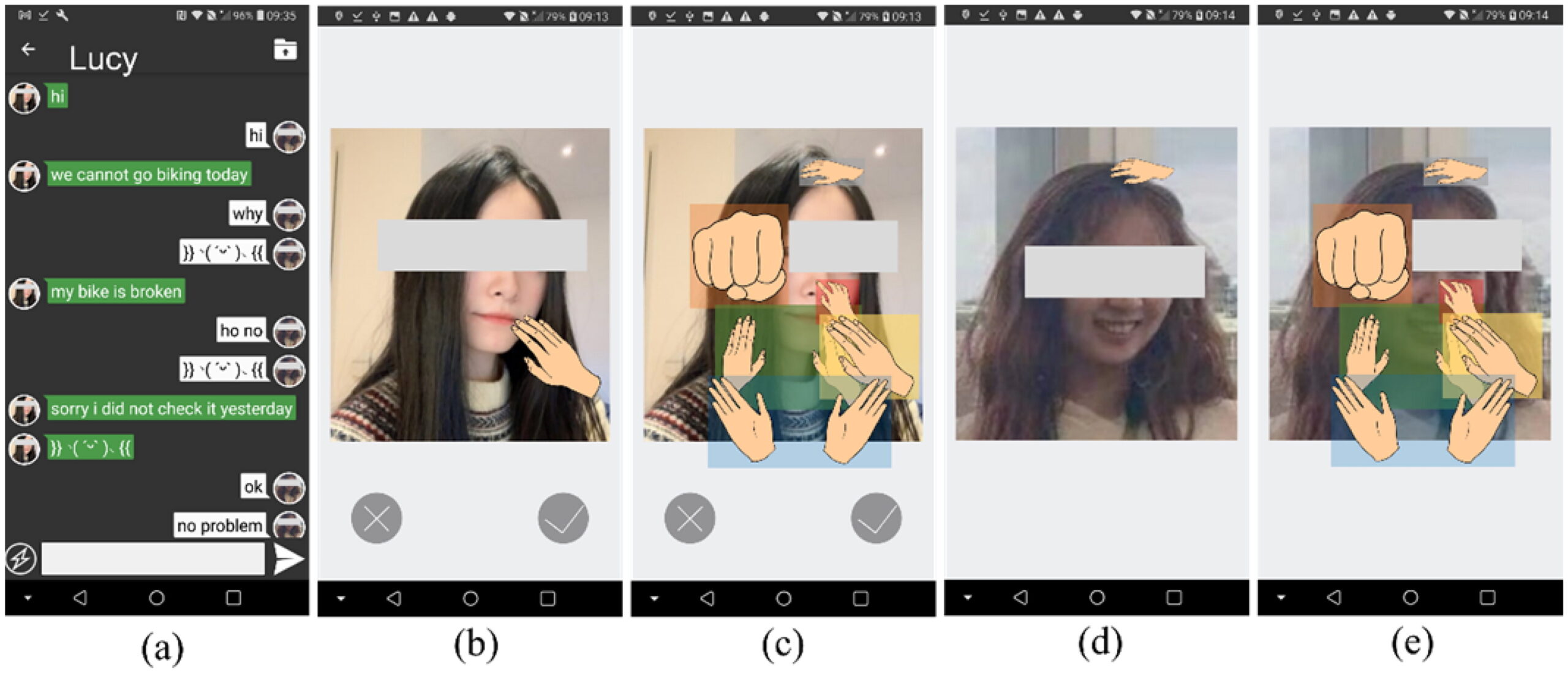
Mediated social touch (MST) is a popular way to communicate emotion and connect people in mobile communication. This article applies MST gestures with vibrotactile stimuli in two online communication modes—asynchronous and synchronous communication (texting and video calling) to enhance social presence for mobile communication. We first designed the application that included the visual design of MST gestures, the vibrotactile stimuli design for MST gestures, and the interface design for texting and video calling. Then, we conducted a user study to explore if the MST gestures with vibrotactile stimuli could increase social presence in texting and video calling compared to MST gestures without vibrotactile stimuli. We also explored if the communication modes affected the social presence significantly when applying MST signals. The quantitative data analysis shows that adding vibrotactile stimuli to MST gestures helps to increase social presence in the aspects of co-presence, perceived behavior interdependence, perceived affective understanding, and perceived emotional interdependence. Adding vibrotactile stimuli to MST gestures causes no significant differences in attentional allocation and perceived message understanding. There is no significant difference between texting and video calling when applying MST signals in mobile communication. The qualitative data analysis shows that participants think MST gestures with vibrotactile stimuli are interesting, and they are willing to use them in mobile communication, but the application design should be iterated based on their feedback.
FULLTEXT: PDF REFERENCE: BibTeX EndNote
DOI: 10.1080/10447318.2022.2148883